


Heat resistance is a crucial property when it comes to stretch films, especially in various industrial and commercial applications. As a supplier of Black Stretch Film, I often get inquiries about the heat resistance of our product. In this blog, I'll delve into what heat resistance means for black stretch film, factors affecting it, and its practical implications.
Understanding Heat Resistance in Stretch Films
Heat resistance refers to a material's ability to withstand elevated temperatures without significant degradation in its physical and mechanical properties. For black stretch film, this means maintaining its integrity, strength, and elasticity when exposed to heat. When a stretch film is exposed to high temperatures, several things can happen. It might start to soften, lose its stretchability, or even melt, which can compromise its ability to hold products together during packaging or storage.
The heat resistance of stretch films is typically measured in terms of the temperature at which certain changes occur. For example, the softening point is the temperature at which the film begins to lose its rigidity and becomes more pliable. The melting point is the temperature at which the film turns from a solid to a liquid state. These values are important as they determine the upper temperature limits within which the film can be used effectively.
Factors Affecting the Heat Resistance of Black Stretch Film
Several factors contribute to the heat resistance of black stretch film. One of the primary factors is the type of polymer used in its production. Most stretch films, including black ones, are made from polyethylene (PE). PE Stretch Film comes in different densities, such as low-density polyethylene (LDPE), linear low-density polyethylene (LLDPE), and high-density polyethylene (HDPE). Each type has different heat resistance characteristics.
LDPE has a relatively low melting point, usually around 105 - 115°C (221 - 239°F). It is more flexible and has good stretchability but may not be suitable for applications where high heat resistance is required. LLDPE, on the other hand, has a slightly higher melting point, typically in the range of 120 - 125°C (248 - 257°F). It offers a good balance between stretchability and heat resistance, making it a popular choice for many stretch film applications. HDPE has the highest melting point among the three, usually around 130 - 137°C (266 - 279°F). It is more rigid and has better heat resistance, but it may be less stretchable compared to LDPE and LLDPE.
Another factor that affects heat resistance is the presence of additives. Some additives can enhance the heat resistance of the film by improving its thermal stability. For example, antioxidants can prevent the film from oxidizing and degrading at high temperatures. UV stabilizers can also help protect the film from the damaging effects of heat and sunlight, which can cause the film to become brittle and lose its strength over time.
The manufacturing process also plays a role in determining the heat resistance of black stretch film. The way the film is extruded, stretched, and cooled can affect its molecular structure and, consequently, its heat resistance properties. For example, a film that is stretched more during the manufacturing process may have a more oriented molecular structure, which can improve its heat resistance.
Practical Implications of Heat Resistance in Black Stretch Film
The heat resistance of black stretch film has several practical implications in different industries. In the food industry, for example, stretch films are often used to wrap food products for storage and transportation. If the film does not have sufficient heat resistance, it may melt or deform when exposed to the heat generated during cooking, baking, or pasteurization processes. This can not only compromise the integrity of the packaging but also pose a risk to the safety of the food product.
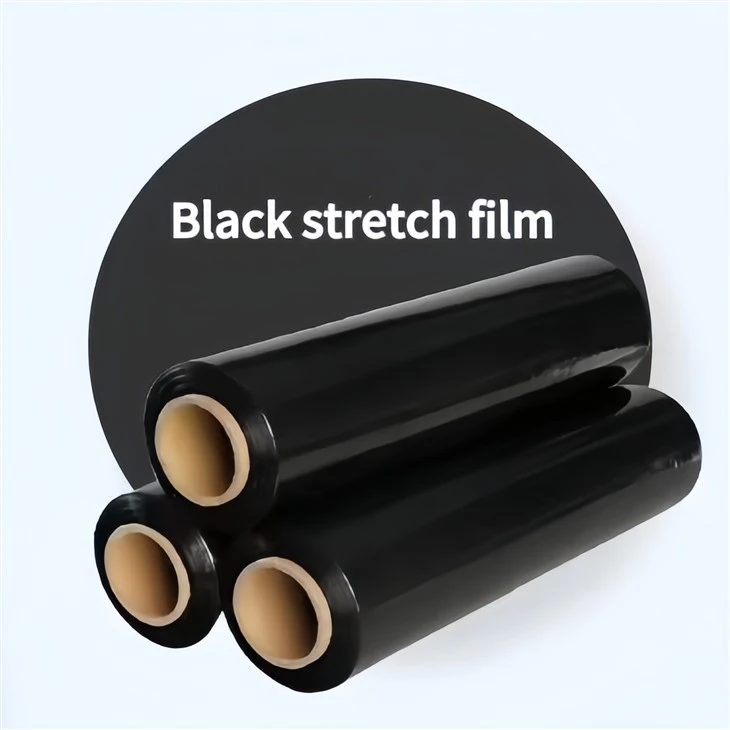

In the industrial sector, black stretch film is commonly used to secure pallets of goods during shipping and storage. If the film is exposed to high temperatures during transit, such as in a hot warehouse or a shipping container in direct sunlight, it may lose its stretchability and strength. This can cause the pallets to become unstable, leading to potential damage to the goods and safety hazards for workers.
In the automotive industry, stretch films are used for protecting car parts during manufacturing and transportation. The heat generated during the painting and curing processes can be quite high, and the film needs to be able to withstand these temperatures without melting or leaving residue on the parts.
Comparing Black Stretch Film with Other Colors
Black stretch film is often chosen for its ability to provide privacy and block out light. However, how does its heat resistance compare to other colored stretch films, such as BLUE Stretch Film and GREEN Stretch Film?
In general, the heat resistance of stretch film is more dependent on the type of polymer and additives used rather than the color. As long as the same polymer and additives are used, black, blue, and green stretch films should have similar heat resistance properties. However, it's important to note that the pigments used to color the film can sometimes affect its thermal stability. Some pigments may absorb more heat than others, which can cause the film to heat up more quickly and potentially reduce its heat resistance. Therefore, it's essential to choose a high-quality colored stretch film that has been tested for heat resistance.
Testing the Heat Resistance of Black Stretch Film
To ensure that our black stretch film meets the required heat resistance standards, we conduct various tests. One of the most common tests is the differential scanning calorimetry (DSC) test. This test measures the amount of heat absorbed or released by the film as it is heated or cooled. By analyzing the DSC curve, we can determine the melting point and other thermal properties of the film.
We also perform practical tests by exposing the film to different temperatures for a specified period of time and then evaluating its physical and mechanical properties. For example, we may measure the film's tensile strength, elongation at break, and tear resistance before and after the heat exposure. If the film shows significant degradation in these properties, it may not be suitable for applications where high heat resistance is required.
Choosing the Right Black Stretch Film for Your Application
When choosing a black stretch film, it's important to consider the specific requirements of your application. If you need a film with high heat resistance, look for one that is made from a polymer with a high melting point, such as HDPE or a blend of polymers that offers good thermal stability. Make sure to check the product specifications provided by the supplier to ensure that the film meets your heat resistance requirements.
It's also a good idea to ask the supplier for samples and conduct your own tests to verify the heat resistance of the film. This can help you make an informed decision and choose the film that is best suited for your needs.
Conclusion
The heat resistance of black stretch film is an important property that can have a significant impact on its performance in various applications. By understanding the factors that affect heat resistance, comparing different types of stretch films, and conducting proper testing, you can choose the right black stretch film for your specific needs.
If you're interested in learning more about our black stretch film or have any questions about its heat resistance, please don't hesitate to contact us. We're here to help you find the best packaging solution for your business.
References
- "Plastics Technology Handbook" by Howard S. Katz
- "Polymer Science and Technology" by Donald R. Paul and Christopher B. Bucknall


